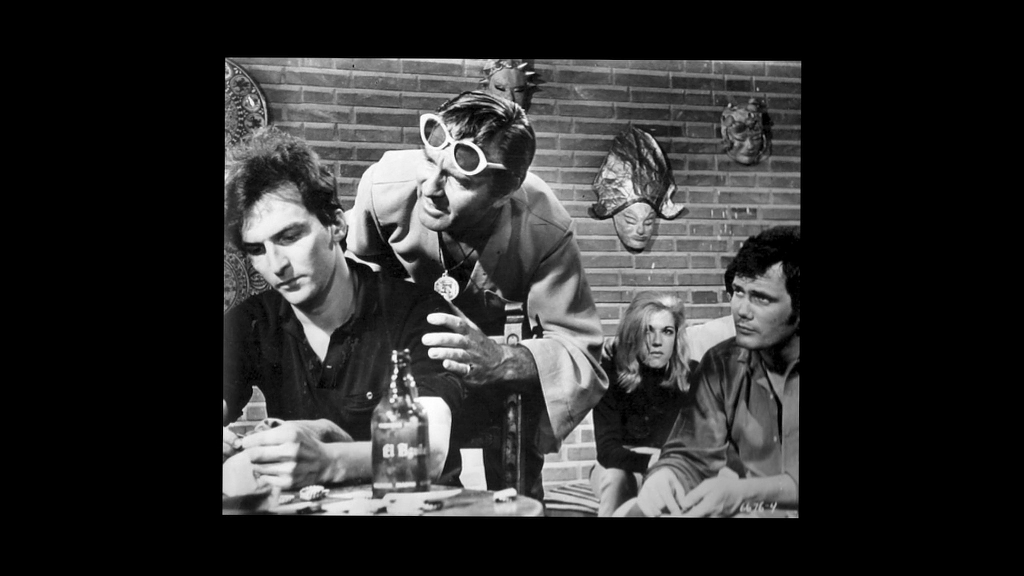
AIP 1967: HALLUCINATION GENERATION (Edward Mann)
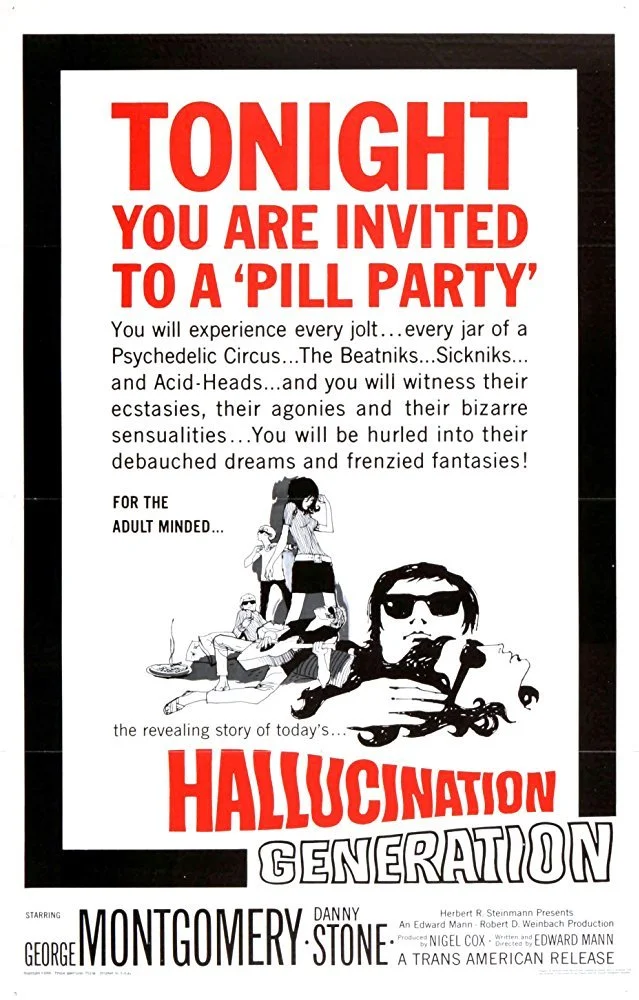
Released in January 1967 by Trans American Films, an arm of AIP developed specifically to distribute more provocative fare on more adult topics; a move, one would assume, to differentiate itself from previous teeny affiliations. But it’s hard to understand why Hallucination Generation would be the first designation, a sometimes prudish and antiquated, anti-drug tract more in line with marijuana cheapies from the 1930s. It even comes with the requisite text onscreen denouncing illicit substances - some clunky nonsensical language equating capsules of space travel with capsules of dope.
Danny Stone, the film’s star, is actually Danny Steinmann, the director behind the ‘80s neon-sleaze Linda Blair vehicle Savage Streets and, maybe more significantly for me, the fifth Friday the 13th film (the one with the decoy Jason, Roy, in a blue hockey mask). The “Presenter” is Herbert R. Steinmann, his East Coast art-dealing father. One could read heavily into some patriarchal frictions or backstories - is Bill Williams (Steinmann/Stone), an aspiring writer and bon vivant American drifter coasting in Ibiza, so reliant on family money to front his lifestyle, a sly hint of Steinmann’s preoccupations and proclivities prior to this? This is merely speculation on my part, but Steinmann - who passed in 2012 - is a mysterious cultish figure. Perhaps the truth is somewhere in between, just as his director persona sits somewhere between the hard-nosed, coke-addled lech from the Crystal Lake Memories book to the wizened old Hollywood pro personality to be gleaned from his last interviews. (One longish interview online also details his friendships with the likes of Charles Bronson, Telly Savalas, and this film’s lead, George Montgomery. Plus early acting on-stage with the likes of Joe E. Brown and Eddie Bracken.)
In Hallucination Generation, following some familiar getting-to-know Bill and his friends sequences, Bill marries Renate Kasché. But soon he hitches his wagon to a beatnik weirdo played by Montgomery, a false guru always espousing some vaguely thought-out wisdom. (“Home stands for Heroin, Opium, Morphine, and Ephedrine”). Eventually, Bill’s leisurely addiction to the good life and drugs forces him out of marriage and into a life of theft that takes him to a breaking point and epiphany inside a monastery. Cue credits.
But before all of this, early on, I’d be remiss if I didn’t mention the memorable musical number (“Rock Numbers”) penned/produced by Steve Rowland, son of filmmaker Roy Rowland (The 5,000 Fingers of Dr T). He flits, snaps his fingers and struts his stuff between two hip-hugging-wearing ladies with bare midriffs. It’s one of the film’s few highlights.
An independent production picked up by AIP, and sent to the bottom-rung in terms of drive-in status, the final showing on quadruple screenings following Psych-Out and Roger Corman’s The Trip (of which this is an antecedent, by mere months) and Maryjane. This is the picture with the bleak, ponderous vibes to put a cap to your evening, just before daylight.
Relatively unscreened for years, but released on Blu-ray in 2015 in black-and-white and tinted versions. The “trip”, as it were, remains in bright colour in both versions.
In that same interview online with Steinmann (by Jeff Cramer), Steinmann starts by reminiscing of a best friend - maybe an inspiration but a certain drug casualty just prior to to the making of Hallucination Generation. But that last line about his friend could refer to Steinmann’s work in the film world, false starts, stops, frustrated experiences, and firings - starring in a forgotten AIP release, to directing a hardcore in the wake of Deep Throat, to directing Regan from The Exorcist in a glitzy revenge thriller, to finally helming the fourth sequel of maybe the biggest slasher franchise of all time.
“Bobby Berglass, 25 - my best friend who died from a heroin overdose in 1966. Knew me better than anyone, and I still think of him often. It’s all gone so fast.”
It’s all gone so fast, and it’s all so random.